by Norbert Prothmann
“The photocopied everyday life of Albrecht/d.” was the title of an article in the Saarbrücker Zeitung of 1 September 1989. The occasion was an exhibition of Albrecht/d.’s work at “Galerie im Zwinger” in St. Wendel. This headline is a pointed approach to the work of the artist, who was born in Nordhausen in 1944 and moved to the Federal Republic in 1958. After school, he did a bank apprenticeship in Stuttgart.

Postcard by Albrecht/d. with self-portrait in late 1989 – on the card a sticker saying: “The divergence, art market-art history potentiates to esotericism in the 1990s”
In a text about the role of photocopying in his work, he told how he discovered his fascination with photocopiers as a bank apprentice. “Between 1962 and 1966 i worked at a bank and saw the use of the photocopy in everyday office life. for me, the blurriness of these first photocopiers in contrast to the brilliance of the black and white photos was really fascinating. […] After 1965 i began to achieve alienation effects by photocopying collages and it was not until 1969 that klaus staeck was the first to accept the aesthetics of photocopying and to accept photocopies instead of photos of actions for printing in the catalogue <<intermedia heidelberg 1969>>. in 1968 i began to blow up passport-size originals to din a 4 on an automatic copying machine (zinkkopie) and to process them into collages or graphics.” (Albrecht/d. on photocopy in his work)

Albrecht/d. “Instant life, instant love, instant death”, copygraphy collage & lacquer, 1984
Working with the machines, Albrecht/d. quickly realised that copiers could be manipulated and thus integrated into an artistic process. They made it possible to produce mass printed matter easily, quickly and relatively cheaply when print quality was of secondary importance, e.g. for leaflets. In 1968, Albrecht/d. founded his own small publishing house, reflection press.
While Albrecht/d. had initially focused on Dadaism, from 1965 onwards he also became involved with Fluxus. He worked closely with other Fluxus artists, but ultimately remained the only representative of the movement in Stuttgart with his Fluxus actions in the Stuttgart-Zuffenhausen youth centre. Like many of his companions at the time, Albrecht/d. wanted to break up the elitist in art. Joseph Beuys had formulated the succinct motto “Every man an artist”. Albrecht/d.’s art / anti-art followed this principle. As an art teacher, it was his job to bring art closer to pupils. As an artist, he saw this as a mission.

Advertisement for a Fluxus show, George Maciunas, 1962
For the 1973 symposium “Art in Political Struggle”, the Kunstverein Hannover asked the participating artists Albrecht/d., Joseph Beuys, KP Brehmer, Hans Haacke, Dieter Hacker, Siegfried Neuenhausen, Klaus Staeck and Wolf Vostell five questions, the answers to which were published in the symposium documentation. One question was: What do you want to achieve with your artistic work? How do you communicate this work? Who do you reach with it?
Albrecht/d. answered: „On the one hand, the aim of the work is to help politically active groups and so-called “lone warriors” in their work, the fight against injustice and oppression, by visualising problems and issues. . […] The question for the artist, who fights most successfully against oppression and injustice? is self-evident. The history of trade unions and the labour movement teaches that success is only achieved when the struggle of an individual is subordinated in favour of the struggle for rights in the group. Since the artist mostly sees himself as an individualist, there is the possibility of […] finding out about current problems and goals from different points of view.“

Albrecht/d., Artist’s Self Portrait, for “Vincent zu Liebe, van Gogh zu Ehren” exhibition at Kasseler Kunstverein, Kassel, Germany, 1990
The response not only contains the programmatic self-image of the autodidact Albrecht/d., who wanted to reach as many people as possible, regardless of their background, education or social status. It also provides a sense of the diversity of his artistic activity and his boundless enthusiasm for print media. And it also mentions his form of musical-artistic performance, also developed as early as the 1960s, which began as Fluxus, then became the concept of “endless music”, and was varied again and again under new names until the turn of the millennium.
Especially until the 1980s, these concepts were also designed in such a way that the audience could be involved, indeed could actively participate. For Albrecht/d., art education should also be the key to people. Every person should have access to art and have the opportunity to get involved themselves. He participated in countless, also international solidarity and benefit actions: for other artists, for the homeless, addiction counselling, migrants, cultural and environmental initiatives, etc.

Albrecht/d., Security of Nuclear Power is an Illusion, copygraphy, 1984
With the medium of photocopying and especially with the spread of colour photocopying, Albrecht/d. developed concepts for workshops which he then organised in cooperation with copy shops. Usually, several artists were present who demonstrated and explained the use of colour photocopies for alienations, colour transformations, for situational actions and other creative uses. Visitors could bring their own copy and experiment with it themselves. At the end of the 1980s, such experimental approaches were trend-setting.

Albrecht/d., For Norbert, copygraphy & mixed technique, 1985
Albrecht/d. always saw himself as a political artist, a separation of life and work did not exist for him. Violence in any form and its trivialisation by the media, leading to deadening, was one of his main themes. In his sometimes wall-sized compositions of interlinked individual collages – not unlike mind maps – he reflected the simultaneity of war, torture, oppression, expulsion, dehumanisation, environmental destruction, power, consumption, sex and pure triviality in a kaleidoscopic, dystopian rush of images that often brought his audience to the limit of overtaxing themselves, but purely analytically and associatively conveyed a very exact picture of our world – which, of course, many did not want to see in this way.

Albrecht/d., Car Picture, colored copygraphies & mixed technique with painted frame,1986/1989
Albrecht/d. did not limit himself to the intoxication of these visual worlds. A spiritual level always resonated in his work. From the 1960s onwards, he described himself as a pacifist Buddhist. Buddhism seemed to him to be the means to overcome the inhumanity of the world and its increasing destruction. There are countless references to Buddhism in his work, often only as small details. Albrecht/d. wanted to reach as many people as possible, he wanted to make us think, he had a message. And he wanted us to look closely.

Much more information can be found on the German website of Albrecht/d.:
++++×××××××××××××××××+×++
Albrecht/d. and the mußikant, Stuttgart, published 2017
Joseph Beuys & Albrecht/d. – Performance at the ICA London on November 1, 1974, vinyl, side 1 (published 1976)


 Example of collected waste stamped by the PaperPolice being also distributed by mail


 Stampart on envelope, Hans-Ruedi Fricker,,Switzerland, 1986
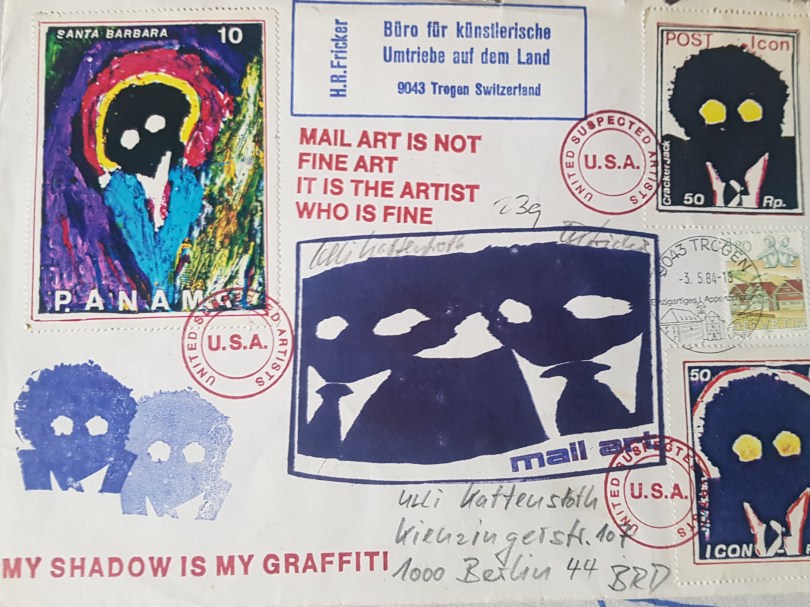 Programmatic messages by mail, Hans-Ruedi Fricker, Switzerland, 1983


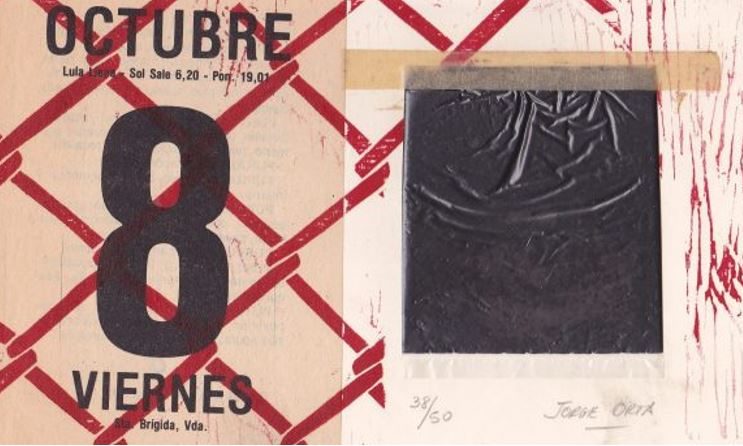

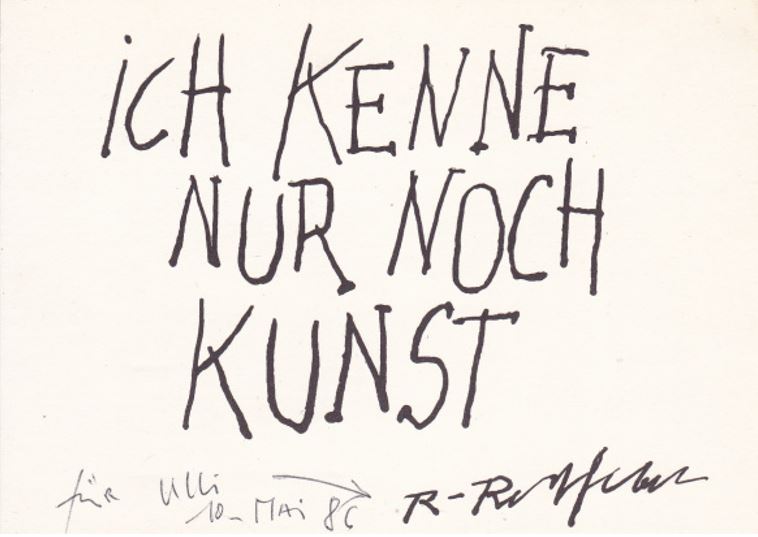
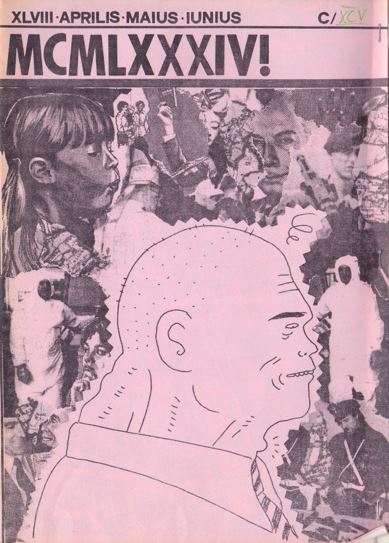
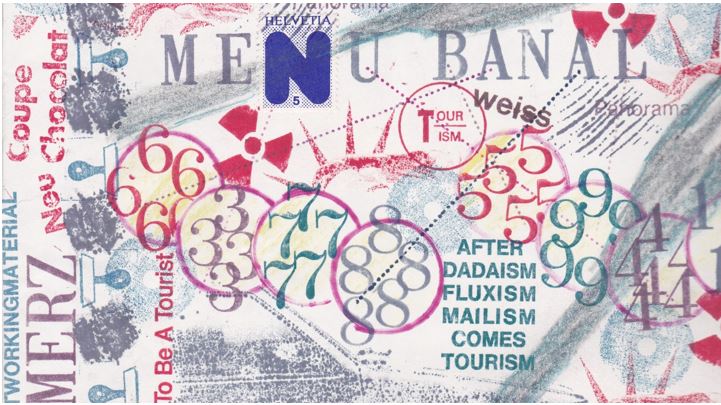
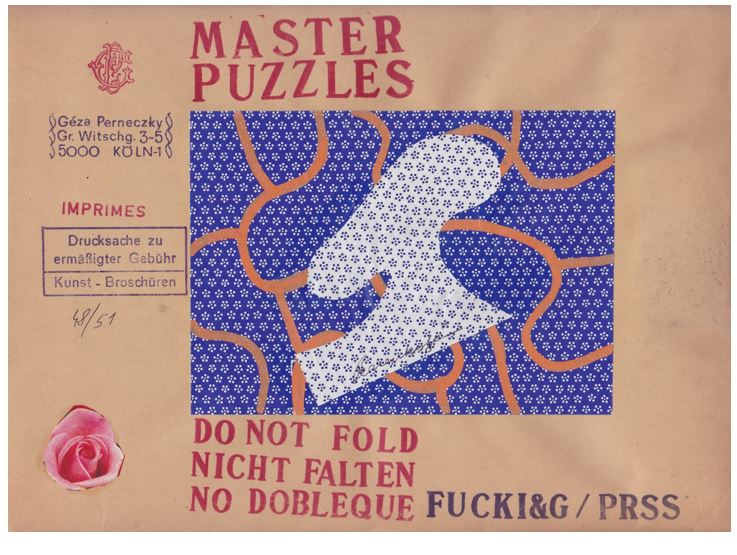 Mail art object by Géza Perneczky, Germany/Hungary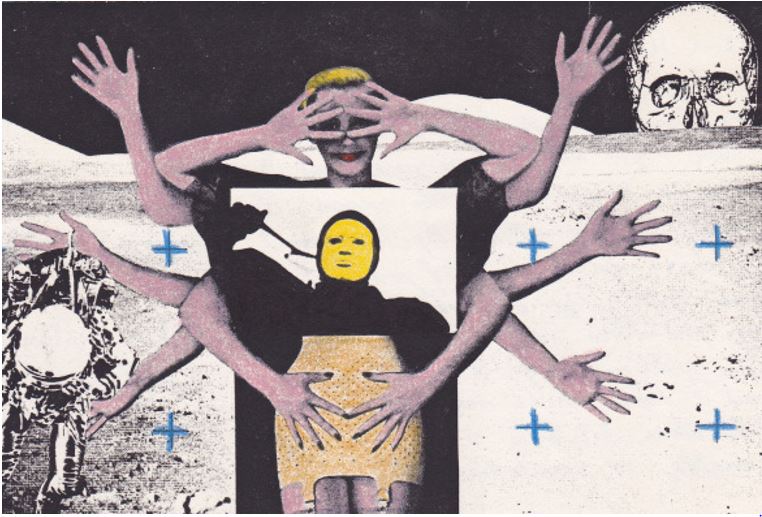
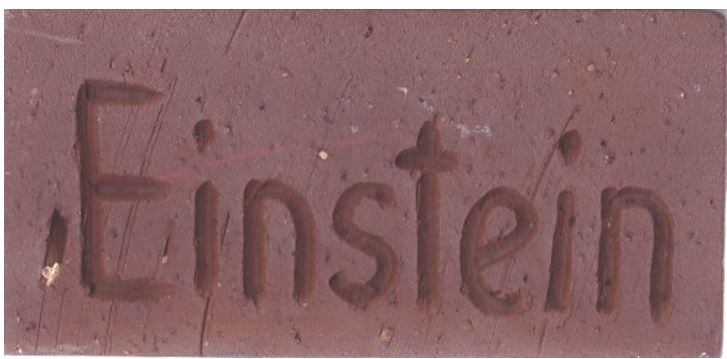
 SUBURBAN TRACKER
You must be logged in to post a comment.