POST-INDUSTRIALISM / BRICKWORK PARK MILDENBERG


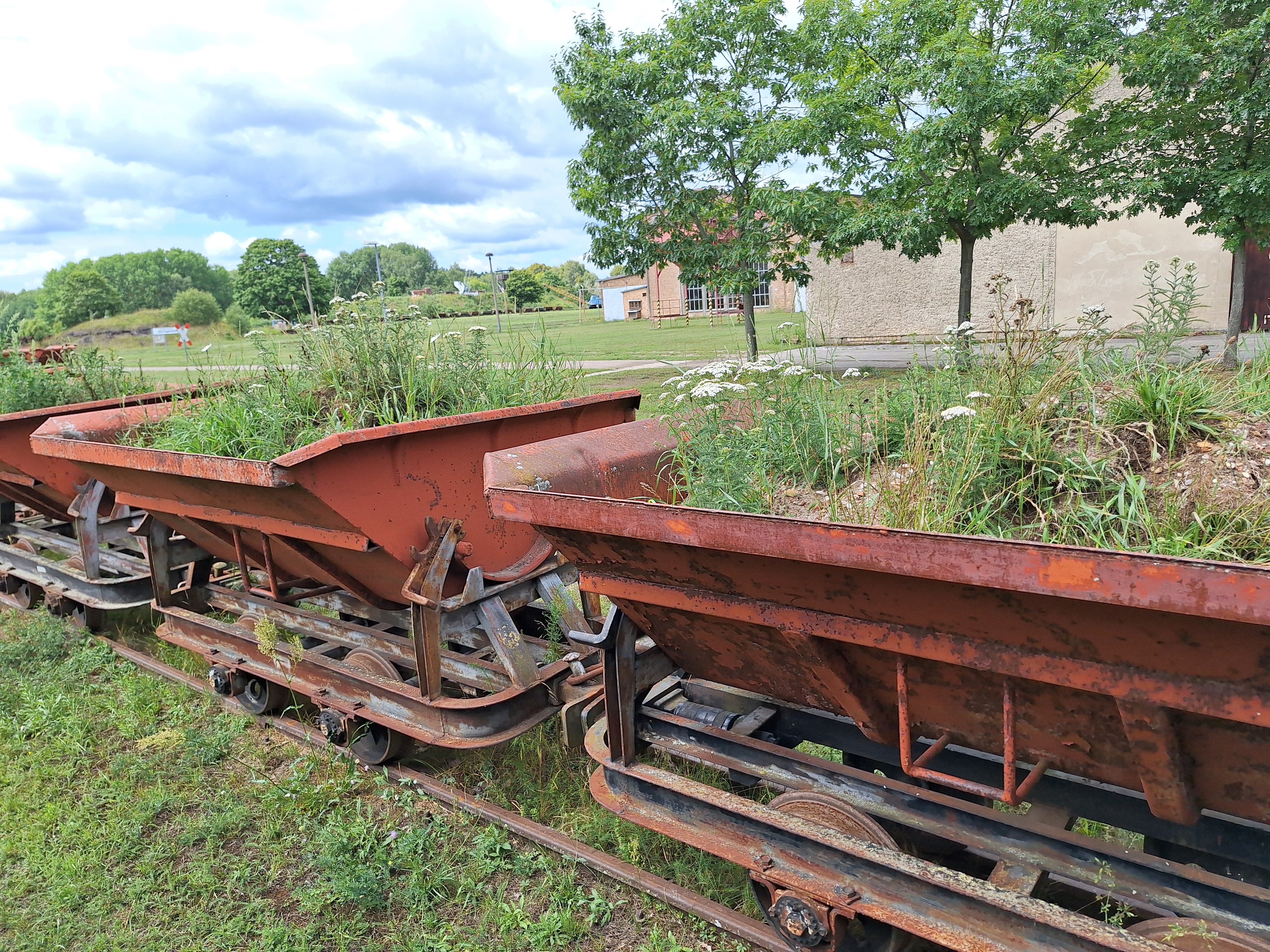
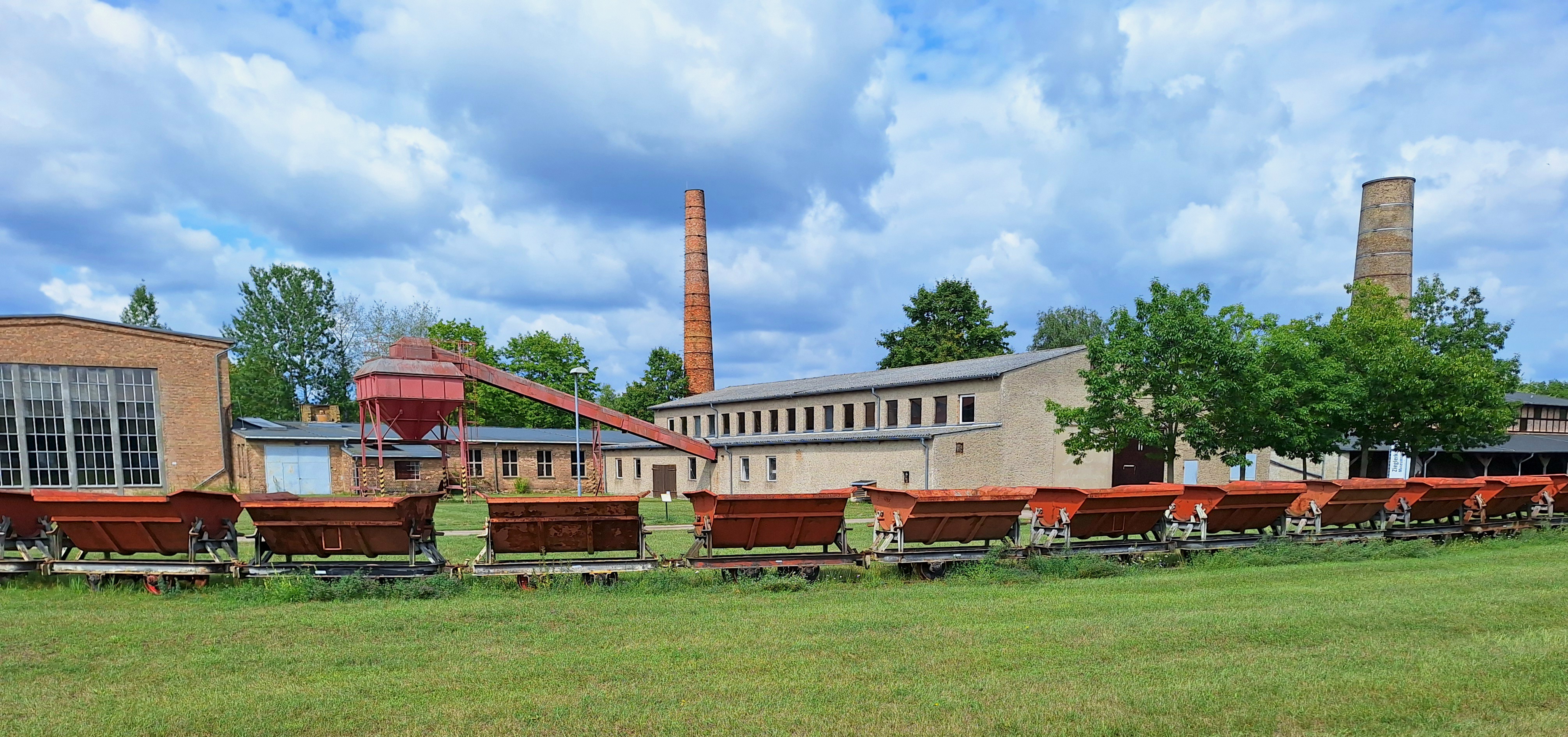
The Mildenberg Brickworks Park was once the largest brickworks in all Europe. Today it is an industrial museum and a popular excursion destination. Museum harbour, ring kilns, workshops and machine halls, everything can be visited. The site is in fact very large – so if you don’t want to walk around all the diverse stations, you can use optionally the free light railway..

Technology of early 20th century: a typical ring kiln

Miiildenberg Brickworks Park is located around an hour north of Berlin in the middle of the Zehdenick clay pit landscape. Brick production in the area dates back to 1887, when rich deposits of clay were discovered during the construction of the Löwenberg-Templin railway line.

The former industrial harbour with old barge and crane

Hence, at the beginning of the 20th century the huge bricksworks area was created near Mildenberg within a rather short period of time. The development was favoured by the fact that the clay quarries were located in the immediate vicinity of the Havel and thus offered favourable transport options by barge. Berlin, which was expanding rapidly due to immigration, had an enormous demand for building materials, which could now be met. The production peaked in 1910 at 625 million bricks a year, fired in 57 Hoffmann ring kilns. 

One of the many former clay pits being now beautiful lakes

Afrer 1945, the brick industry in the then Soviet occupation zone developed very well again. Reconstruction after the 2nd World War again required masses of building materials. In the GDR, the area around Mildenberg was the largest, now state-owned, manufacturer of bricks and roof tiles, until the introduction of prefabricated construction technology in the 1960s led to a renewed decline in importance. After reunification in 1991, operations were discontinued as investors saw no longer a future here.

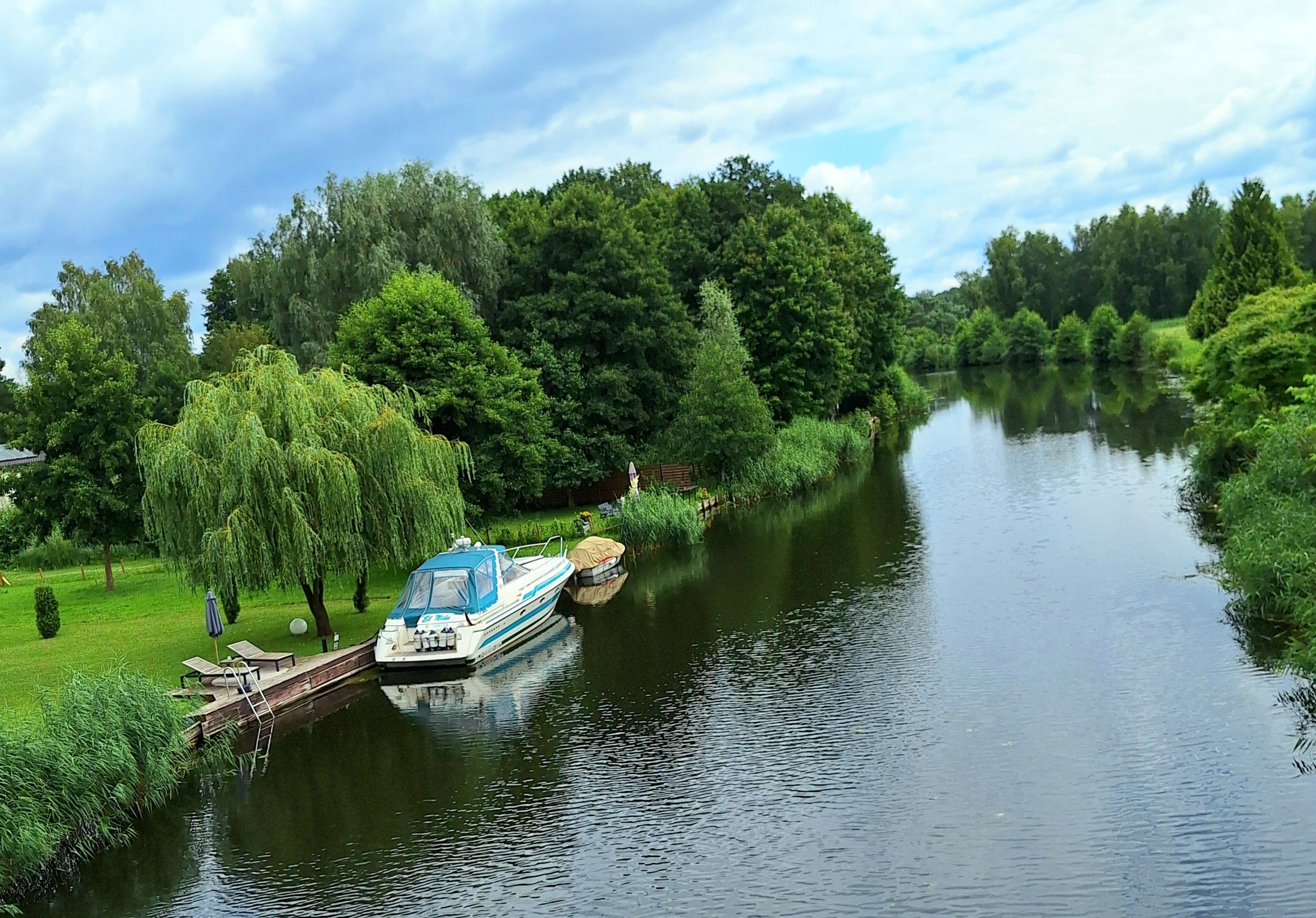
View on Havel river at Mildenberg winding to the south and Berlin

And now this blog will continue desirable summer holidays, cheers!

CANOE TRIP ON THE OLD HAVEL

“The Havel, to say it again, is quite an unusual river;
you could call it the North German or the lowland
Neckar according to its shape.”  Theodor Fontane


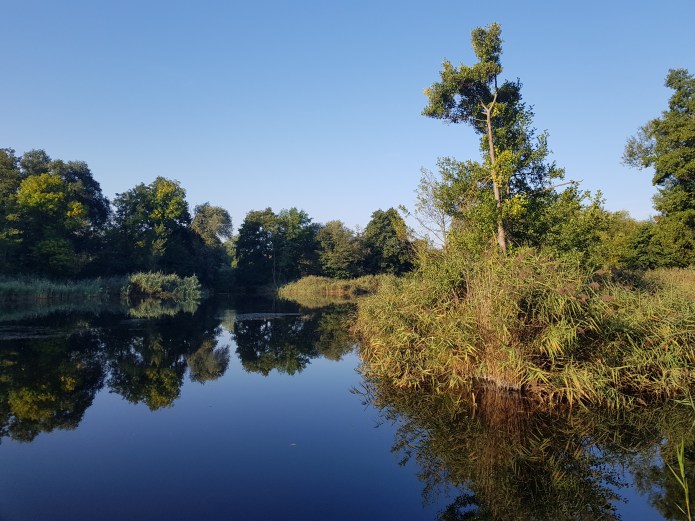
Early in the morning on the banks of the Havel

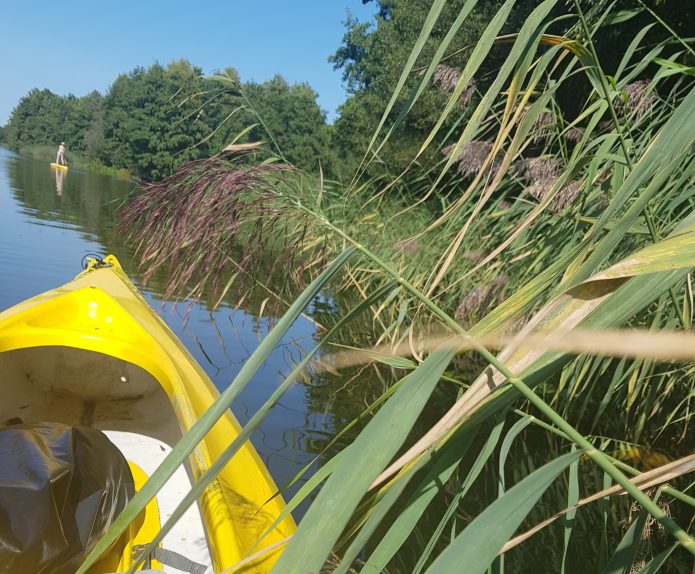
In September 2020 (during the unfortunate coronavirus period), we devoted ourselves to more nearby beauty, as traveling to other countries was very difficult these days. And so we also went on a canoe trip on the old Havel north of Berlin between Zehdenick and Mildenberg. And we also came to the conclusion that the nearby obvious is often overlooked because people only want to get to know the wide world around the whole globe. That’s a shame, when there are small paradises just around the corner here with us in the vast Mark Brandenburg.

Feeling your way through a wild and overgrown side arm; my wife is at the top on her beloved SUP

The meandering main stream winds its way through an original countryside

The German writer Theodor Fontane can be regarded as a true forerunner of contemporary outdooring, as he spent three decades walking through Brandenburg in the 19th century, when it was not yet fashionable to do so, and wrote about it in his famous “Wanderungen durch die Mark Brandenburg” in a total of five volumes. And at that time this was generally still something rather crazy, because people usually went into the great outdoors only to collect wood, graze their cattle or simply just to hunt.

We are in flow at a wide point of the primordial current


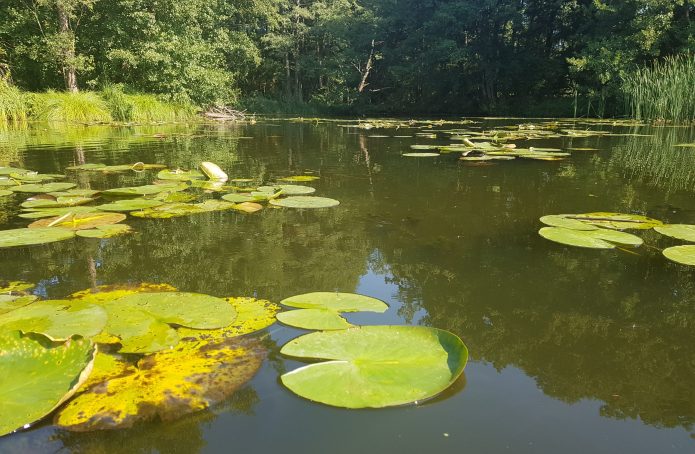
Water lilies also thrive here very well, an obvious sign of very clean water

And as you can see, the beautiful Havel here is once again a very pristine river, which was not always the case, as the area here was long dominated by the brick industry, which had to provide supplies for the rapidly growing Berlin not far away. And so there are really many clay pits in the area, but now these pits are only beautiful small lakes. But the renaturation of the Havel has been underway for many years now.

Dense shield belts everywhere along the natural river

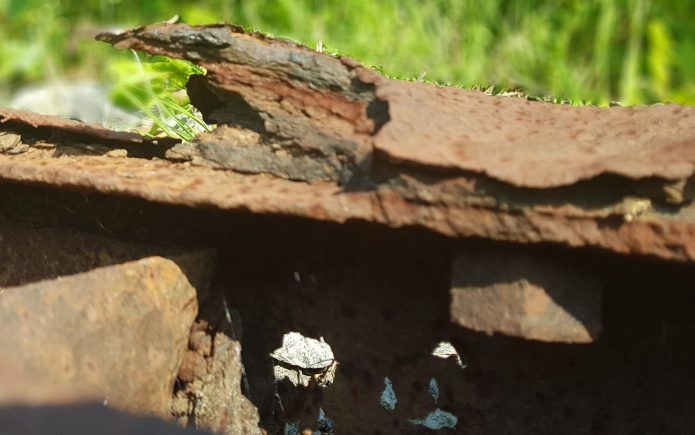
An old decaying technical construction by the wayside

The next stage of this major renaturation project of the Havel began in 2024. Over the next few years, 15 oxbow lakes along 90 kilometers of the Lower Havel between Plau and the mouth of the Elbe will be restored to flow. In addition, dykes will be dismantled and 71 revetments will be removed along 29 kilometers, alluvial forests will be created and much more. Of course, this will not happen so quickly and will be a complex process over the coming years. But these pictures here show clearly, it really is worth all the effort.

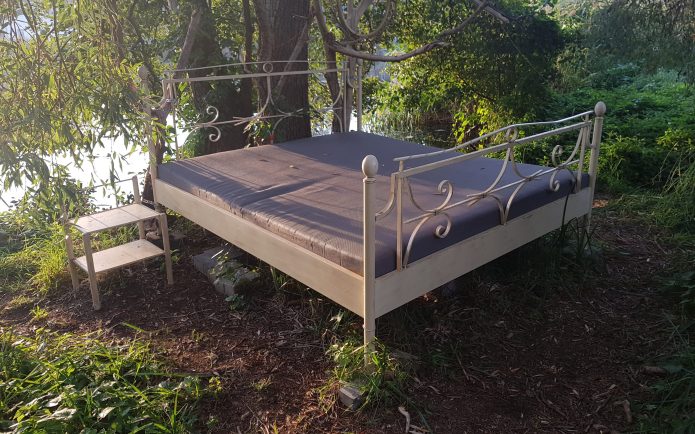
An illustrious resting place for the night was also hidden in the vast green jungle

And with these varied and colorful impressions, I wish everyone a wonderful summertime and vacation whereever it may be.

COLORS OF BRUGES IN FLANDERS

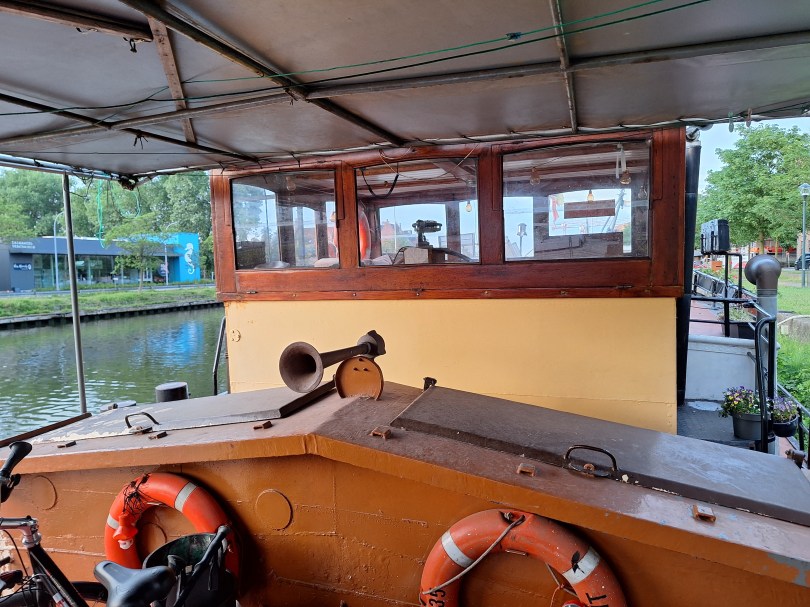
We are currently visiting friends in the old Flemish city of Bruges, where they live on a houseboat on the edge of the city centre. This is something completely different, the old cargo ship moored in the canal to Ostend is also very cosy and spacious.

It’s also not far to the old town, which is still completely medieval, and it’s fair to say that the entire old centre is a unique and impressive open-air museum that fortunately survived the last two world wars of the 20th century completely unscathed.

Now, in the still pre-season, it is not completely overcrowded and very pleasant.

CESKY KRUMLOV – BOHEMIAN HOME OF EGON SCHIELE AND MUCH MORE

Postcard with view on the castle of Cesky Krumlov, 1924

Hardly any other place inspired Egon Schiele as much as Krumlov, one of the most beautiful Renaissance towns in Europe and a first-class architectural jewel. Its beauty and location in the heart of the Southern Bohemian cultural landscape have always made this town a centre of attraction for painters and writers.

Old houses in one of the many winding alleys

Greened facade and entrance door in the centre

The winding, confusing ensemble of houses on the Vltava River looks like something out of a Grimm’s fairy tale. A magnificent castle towers over the old town centre with its humpbacked alleyways, squares, rippling fountains and churches. The Old Town is picturesquely surrounded by the Vltava river, which meanders wildly here in a rather primordial manner and attitude – a gesticulating nature at its finest.

Former Austrian Emperor hanging over the bar at Restaurant Schwejk

The finely restored market-place with charming flowers

We visited this enchanting place for the first time in the 1990s, when it still had more socialistic charm with many unrenovated houses. On the other hand, it was very tranquil and authentic, which is no longer the case today. In the high season, crowds of tourists push their way through the city, which is so popular with Chinese travellers in particular that a copy has been built in China in the city of Dongguan. A visit in the low season is therefore advisable.

Fashion outlook in a shop’s window

The lovely studio house of the Austrian painter Egon Schiele

The Austrian painter Egon Schiele was also enthusiastic about Krumlov, the birthplace and hometown of his mother, throughout his life; he had known the small town since his childhood from visits to relatives and also spent his holidays in Krumlov during his time at the academy. In May 1911, Schiele and his partner Wally Neuzil – a former model for Gustav Klimt – moved to Krumlov; they enthusiastically moved into the garden house of the art-loving merchant Max Tschunko, where Schiele was finally able to work outdoors. However, the idyllic hustle and bustle in the artist’s hermitage soon came to an end. The couple’s wild marriage and the fact that Schiele modelled for very young girls outraged the townspeople so much that he was forced to leave Krumlov again in August 1911: ‘I don’t want to think about Krumlov, I love the town so much, but the people don’t know what they’re doing.’


Egon Schiele, Krumau (Krumlov), oil on canvas, 1915

Despite the really too many tourists today, you still find very quiet and inspiring places in the city or optionally just make a surprising rafting tour on  Vitava river around the beautiful and impressive city. This is definitely a good way to round off a visit. 


ODD STONED COUNTRYSIDE


When entering a borderland of human civilization and natural wildness the own intentions and angles of view obviously do quickly change as more imminent primordial ambitions dominate the mind automatically.
Push the basical mental button in order to get beamed to a stoned landscape in the heart of a shadowy and nomadic countryside where colorful symbols have been recently pinned to transmutant walls as the only leading signs. A lost place of nowhere but anywhere to be found. The more surreal cracking walls and bursting floors are no safe place for resting or dreaming – better not to stay longer than required in this Interior of constant decay which reminds us insistingly of being cautious of where to go and what to do generally in life.


POST-INDUSTRIALISM / “ZECHE ZOLLVEREIN” IN ESSEN


The Ruhr area was once the heart of the German montan industry, where coal and steel determined people’s lives for a long time. Coal has been mined there for a long time, and the earth underground more resembles Emmental cheese, although nobody knows exactly where all the mine shafts are from which the coal was brought to light.

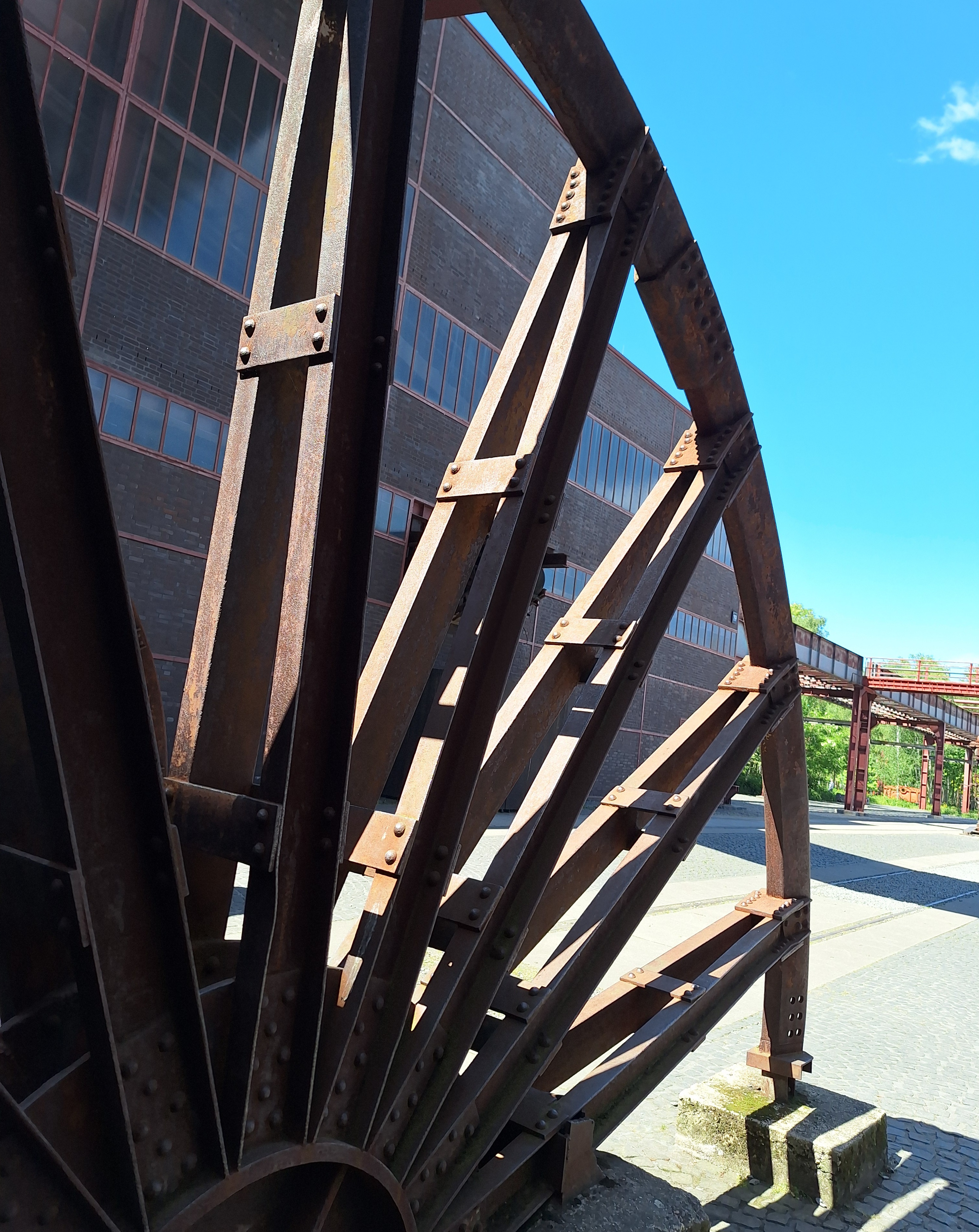
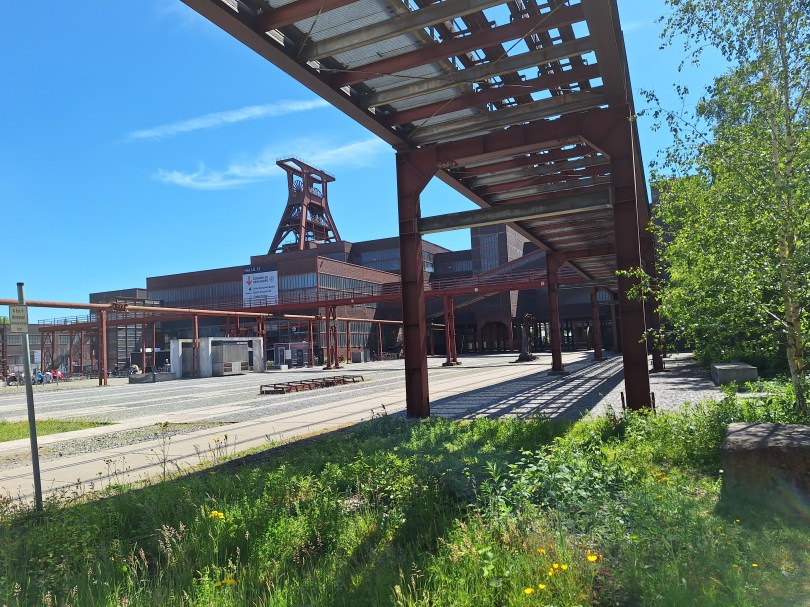
“Zeche Zollverein” (i. e. Zollverein colliery) was a coal mine in Essen that operated from 1851 to 1986. After the commissioning of the central winding shaft 12, the colliery had the highest production rates of all German coal mines for a time in the middle of the 20th century. Today it is an architectural and industrial monument. 

Together with the neighbouring coking plant, pits 12 and 1/2/8 of the colliery have been a UNESCO World Heritage Site since 2001 where various guided tours are also offered underground, but you can also simply stroll around the extensive site, where there are also many seating areas in almost green surroundings, where coal trains will pass by only in your mind’s eye.

Today the Ruhr area is really very green everywhere, the air is relatively clean again, and the rivers are no longer cesspools as they were in the 19th century, when the quick money of black gold and steel lured the Krupp family of entrepreneurs to Essen and provided them with a stately home with a huge park that makes you think more of the castles of English lords. This so-called ‘Villa Hügel’ is however now freely accessible to everyone as a place of culture and art.

How times change!


THE WEIRD STORY OF THE FIRST GERMAN MOSQUE


Completely by chance I stumbled on the above 100 year old postcard image, which made me curious to know what it was all about, because a mosque somewhere in the vastness of the Mark Brandenburg I had never seen before. The postcard shows parts of the so-called Half Moon Camp in Wünsdorf including the camp’s own mosque.

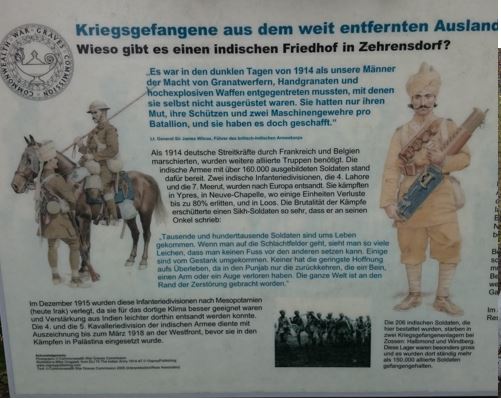
The Half Moon Camp was built at the beginning of WW I in what was then Wünsdorf near Zossen as a camp for about 30,000 Muslim Arabs, Africans and Indians (but also Hindus and Sikhs) prisoners of war who were sent from the colonies as part of the British and French armies in 1914/1915 to fight in the merciless and man-eating trench and position warfare on the Somme and elsewhere.

Former site of the camp/mosque in Wünsdorf

In addition to the inmates of these two colonial armies, however, Muslim members of the Imperial Russian Army were also interned there. In the Crescent Camp itself, active attempts were now being made to persuade the prisoners of war detained there to switch sides as part of a Muslim ‘holy war’ against the two colonial powers, England and France, “in order to wage a kind of guerrilla warfare with local rulers and tribal lords, thereby tying up as many English and French troops as possible, who would then be missing from the European battlefield.” (1)

Recreation and food distribution in the Wünsdorf Crescent Camp around 1915

At the request of the Mufti of Constantinople, therefore, the wooden mosque pictured above was also built in the camp in 1915 (the first mosque ever built in Germany). This was “supplemented by visits and speeches, especially by Turkish, Tatar and Arab politicians and journalists, who sought to influence the prisoners not only in the sense of German-Ottoman brotherhood in arms and pan-Islamic solidarity.” (2) In addition to the daily briefings, there were also propagandistic camp newspapers in several languages; besides, special attention was paid to the strict observance of Muslim rules (e.g. fasting during Ramadan). However, there is no doubt as to how many camp inmates actually changed sides.

From a historical point of view, this strategy – pushed on the German side by the orientalist and diplomat Max von Oppenheim – is in any case nothing new. “Already the legendary Muslim ruler Saladin had repeatedly entered into alliances with the Franks against rival Muslims or Christians. … The Ottoman Empire had called for holy war in most, not to say all, of the military conflicts in its history.” (3) As a relic of this dubious past in Brandenburg, however, only the Indian cemetery of Zehrensdorf can be found today; nothing remains of the Half Moon Camp itself except the street name Moscheestr. in today’s community of Waldstadt (district of Zossen), a road leading to the former site of the Half Moon Camp mosque, but today a postmodern wasteland.

Indian relief on the cemetery in Zehrensdorf

Finally, located outside of Zossen about 500 meters off the L74 highway in a wooded area is the cemetery of honor for the 206 Indian soldiers of the Half Moon Camp who died in captivity. This final resting place was rededicated in 2005 as the Zehrensdorf Indian Cemetery in the deserted area of the former Zehrensdorf. Also on the grounds is a memorial and grave marker for the Muslim Tatars from Russia who died here on site.

A bronze memorial plaque at the entrance to the Indian cemetery reads in German and English that the Indian soldiers buried here fell for their country, and that is a bit cynical, because no German, Austrian or Ottoman soldier ever set foot on Indian soil during World War I or before or after to cause trouble there or even to occupy this faraway land. And who would want to die far from home in a completely senseless war? And so it is not surprising that in the former colonies of Morocco, Algeria, Tunisia, India, Pakistan and Singapore there was great resistance and also real uprisings against the war effort in faraway Europe, which was, however, ruthlessly suppressed everywhere by the colonial powers. And without these colonial troops (especially those from India) the course of the war would have been different.
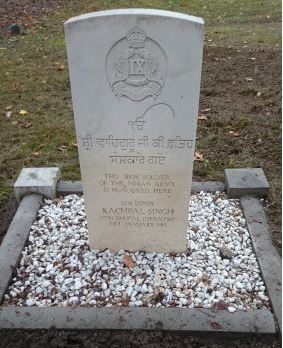
Indian single grave at the cemetery in Zehrensdorf

The cemetery is very well maintained and it is good that there are these places of remembrance, where a critical examination of history can take place. During my visit, gardeners were busy removing the traces of autumn, I also noticed many new individual gravestones, but it is a rather remote and somehow forgotten place in the vastness of the Mark Brandenburg hemmed in by the typical Mark Brandenburg pines and forests. So how often do visitors really get stranded here? I saw only a few traces of visitors, withered remains of memorial wreaths that are probably laid there once a year. The slightly foggy and hazy weather and the cold and damp wind of Autumn exactly matched these irritating alien impressions of another era.


(1)  Loth/Hanisch (Hrsg.), Erster Weltkrieg und Dschihad, München 2014, S. 15
(2)  Gerhard Höpp, Muslime in der Mark, Berlin 1997, S. 73
(3)  Stefan M. Kreutzer, Dschihad für den deutschen Kaiser, Graz 2012, S. 61
 

ENCHANTED FOREST

In our neighbourhood at home one of our favourite trails for hiking leads through Briese Valley / Briesetal near the Northern gates of Berlin. The Briese is a small, not very long river flowing mostly in a glacial groover. Here you may find a wild alder swamp forest, beaver dams and marshland in quite original condition. During our recent visit nature has rested still in winter mode but at least some green to be admired on the watersurface.

The nicest part of this trail starts at the village of Briese in the direction of Zühlsdorf over a distance of around 6 km. There it is possible to make a rest at a nice old forester’s lodge in the woods where you get small snacks (such as homemade deer sausage) and drinks during the weekend all year round and then go back on the other riverside with different views, a nice roundtrip of approx. 12 km.


COOL PLEASURES

I like the winter time very much and when the weather is dry, sunny and also quite cold then, suddenly a complete clarity can spread in our minds. So the month of January – which is also my birth month – is always something special for me in the annual cycle, when the old year is still present after a new year has already begun. This is possibly why the ancient Romans dedicated this month to their ancient god Janus, better known as the god with two faces, who symbolised both beginnings and endings for them – the spirit of entrances and exits.

Icy mountain station on the Fichtelberg (1,215 m) near the German-Czech border

January is usually also the coldest month in the northern hemisphere and begins nine or ten days after the winter solstice, which here means the shortest day of the year and a very long night – a day that is also very important for past cultures and earlier civilisations. In the ancient Celtic cycle of the year, the so-called ‘Raunächte’ begin soon after at midnight on 24 December and last until sunrise on 6 January. For our ancestors, these were truly holy nights, a time spent with family and festivities, in other words, what today is more profanely called the Christmas season.

That’s me and my fast luge in action

Of course, this must also be a good time to really enjoy winter in the mountains, when snow crystals in thick layers cover trees and bushes, hills and meadows, houses and paths in sometimes mysterious and strange ways, inviting you to move on to the distant horizon.

Endless forest path in snowy disguise

And after such a walk through the white-painted woods, it’s time to dive into the real soundtrack of winter: The Walrus Hunt by The Residents  is one of my favourite songs. And now welcome to the real north, the home of the Inuit.