CANOE TRIP ON THE OLD HAVEL

“The Havel, to say it again, is quite an unusual river;
you could call it the North German or the lowland
Neckar according to its shape.”  Theodor Fontane


Early in the morning on the banks of the Havel

In September 2020 (during the unfortunate coronavirus period), we devoted ourselves to more nearby beauty, as traveling to other countries was very difficult these days. And so we also went on a canoe trip on the old Havel north of Berlin between Zehdenick and Mildenberg. And we also came to the conclusion that the nearby obvious is often overlooked because people only want to get to know the wide world around the whole globe. That’s a shame, when there are small paradises just around the corner here with us in the vast Mark Brandenburg.

Feeling your way through a wild and overgrown side arm; my wife is at the top on her beloved SUP
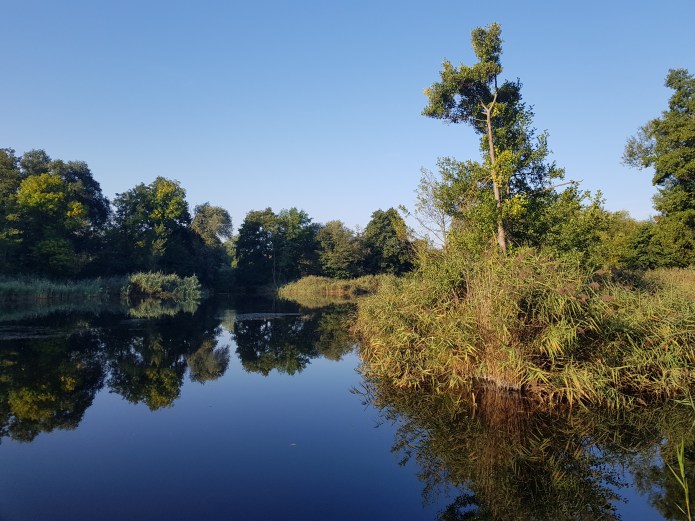
The meandering main stream winds its way through an original countryside

The German writer Theodor Fontane can be regarded as a true forerunner of contemporary outdooring, as he spent three decades walking through Brandenburg in the 19th century, when it was not yet fashionable to do so, and wrote about it in his famous “Wanderungen durch die Mark Brandenburg” in a total of five volumes. And at that time this was generally still something rather crazy, because people usually went into the great outdoors only to collect wood, graze their cattle or simply just to hunt.

We are in flow at a wide point of the primordial current
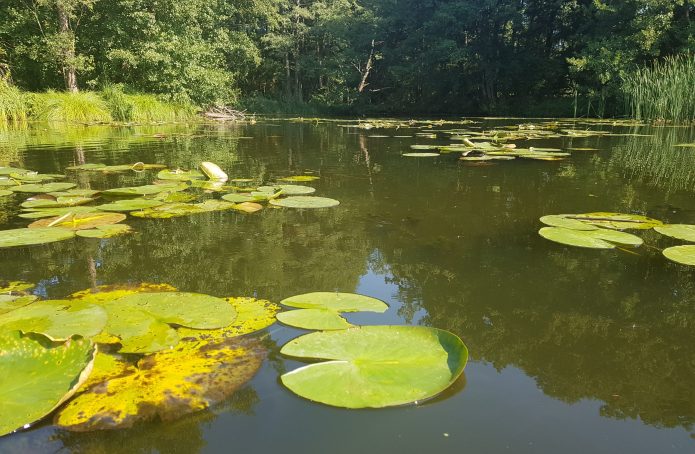
 

Water lilies also thrive here very well, an obvious sign of very clean water

And as you can see, the beautiful Havel here is once again a very pristine river, which was not always the case, as the area here was long dominated by the brick industry, which had to provide supplies for the rapidly growing Berlin not far away. And so there are really many clay pits in the area, but now these pits are only beautiful small lakes. But the renaturation of the Havel has been underway for many years now.
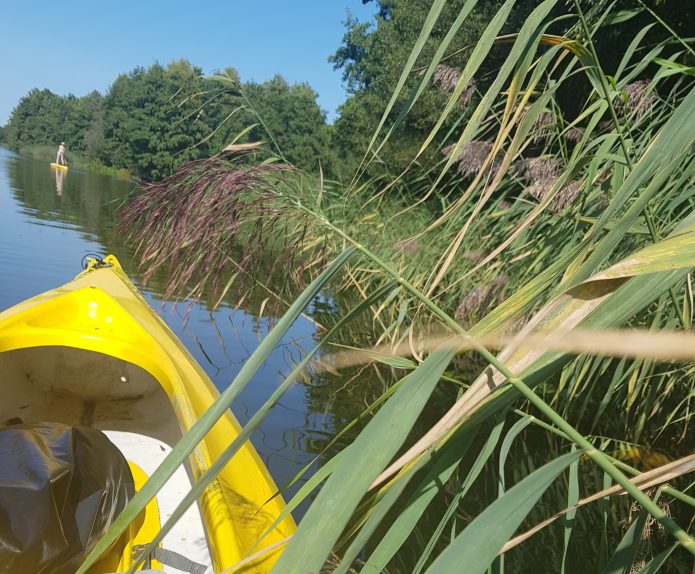
Dense shield belts everywhere along the natural river
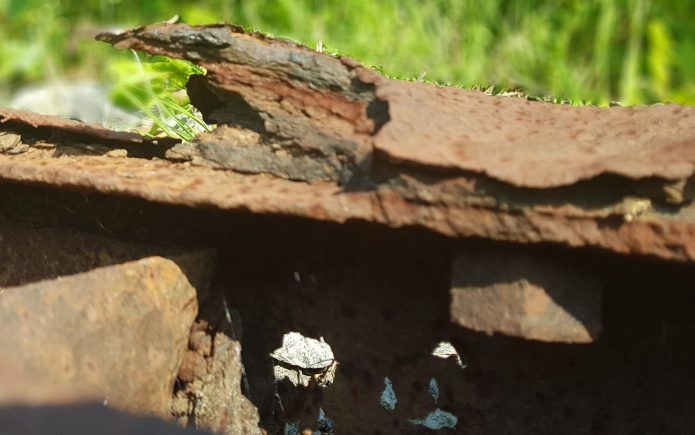
An old decaying technical construction by the wayside

The next stage of this major renaturation project of the Havel began in 2024. Over the next few years, 15 oxbow lakes along 90 kilometers of the Lower Havel between Plau and the mouth of the Elbe will be restored to flow. In addition, dykes will be dismantled and 71 revetments will be removed along 29 kilometers, alluvial forests will be created and much more. Of course, this will not happen so quickly and will be a complex process over the coming years. But these pictures here show clearly, it really is worth all the effort.
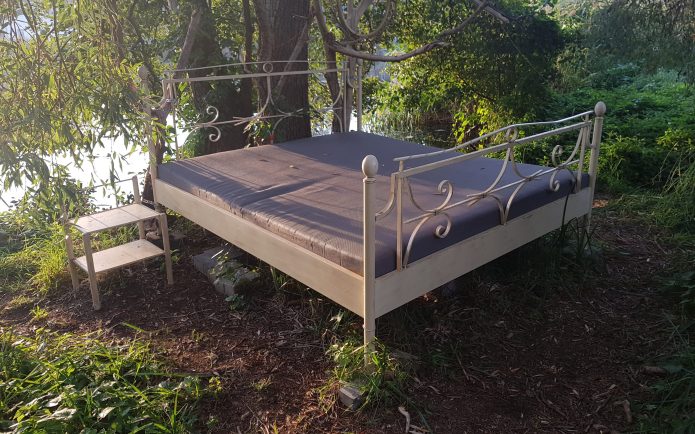
An illustrious resting place for the night was also hidden in the vast green jungle

And with these varied and colorful impressions, I wish everyone a wonderful summertime and vacation whereever it may be.

ENCHANTED FOREST

In our neighbourhood at home one of our favourite trails for hiking leads through Briese Valley / Briesetal near the Northern gates of Berlin. The Briese is a small, not very long river flowing mostly in a glacial groover. Here you may find a wild alder swamp forest, beaver dams and marshland in quite original condition. During our recent visit nature has rested still in winter mode but at least some green to be admired on the watersurface.

The nicest part of this trail starts at the village of Briese in the direction of Zühlsdorf over a distance of around 6 km. There it is possible to make a rest at a nice old forester’s lodge in the woods where you get small snacks (such as homemade deer sausage) and drinks during the weekend all year round and then go back on the other riverside with different views, a nice roundtrip of approx. 12 km.


SECRETS OF A GARDEN

for Ingrid


Today, 80 years after the end of the bloody Second World War and the final liberation of Germany from disgusting and miserable fascism, I would like to write about a peaceful place with a special history. The fact that peace has prevailed in the heart of Europe for so long is, historically speaking, not really a self-evident matter. And unfortunately, one war often leads to another. This has been the case in Europe for centuries, with hundreds of wars in the last 500 years alone. And the current war in Ukraine is just as much a part of this, because it can also be seen as a direct successor to the Second World War, at least the Russian war narrative provides daily proof of this with the abstruse claim that the only thing being fought in Ukraine is against Nazis, while the current Ukrainian President Selensky is a Jew!

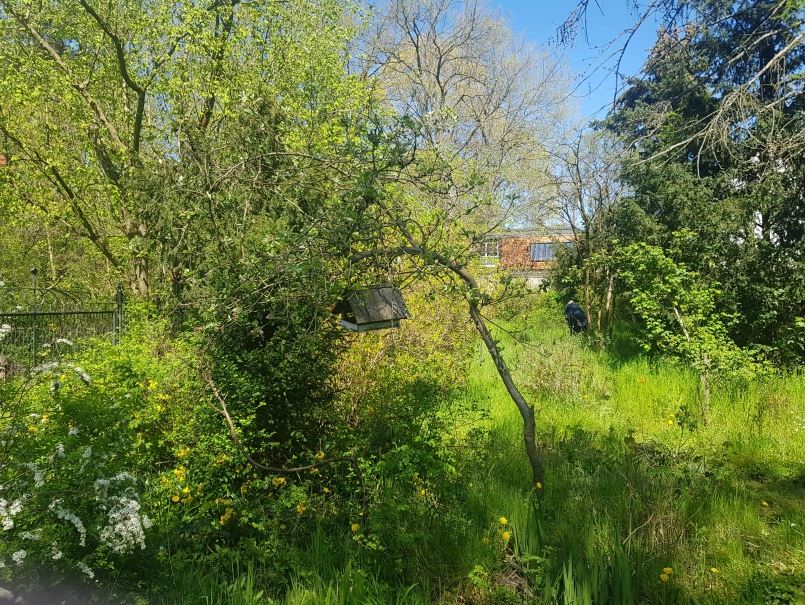
But here in the garden and in the whole country there is peace today, what happiness! But it’s not just a biotope like this that needs looking after. And this peaceful green idyll has been maintained for decades by a still very sprightly enthusiast called Ingrid, who is now 87 years old. However, she can no longer do as much as she used to, so things are getting wilder and more pristine here in her beloved garden. A storm knocked down birch trees in the garden many years ago, but there is nothing left to see of the old trunks and branches, as they have since been completely overgrown by all kinds of moss, grasses and plants, so that they have become one with the earth from which they once grew. So everything here has taken its usual natural course to the delight of insects and birds, who are offered a beautiful retreat with all kinds of hiding places in the very eastern part of Berlin.

In the 19th century, this was still a completely rural area, and for a long time this land also served as a gypsy camp far from the gates of aspiring Berlin. Towards the end of the 19th century, a senior forestry official of the Prussian government acquired this area and built a country house here, where he also carried out botanical experiments and planted rare trees on a trial basis, for example. This country house for the summer has survived all the historical turmoil and still stands here today. Probably for financial reasons, the forestry official then sold the property and house to a Jewish family in the early 1920s, who found a new home here for a while.

Hitler’s seizure of power in Germany in 1933 and the associated inhuman anti-Semitic rage of the Nazis in the country forced the Jewish family into exile in the USA and England. Fortunately, they did this very quickly in 1933, when it was still relatively easy for Jews to simply turn their backs on Germany. Ingrid’s parents, who were friends with the Jewish family, now moved into the old country house as tenants and also took care of all the formalities associated with the house. They acquired part of the property which today forms this fascinating garden. The country house itself was confiscated by the Nazis at some point and sold to a German master baker.

During the GDR era, this was then managed as a special asset and was only under communal administration (in the absence of the Jewish owners). In 1958, the Jewish family once again visited Germany, their old no-longer-home and also their friends here in the old country house. There was later still some correspondence across the ocean, which eventually dried up, but Ingrid’s family continued to live here on a rental basis until the early 1990s. Then, after the end of the GDR, the house was transferred back to the descendants of the Jewish family from the USA, who also came back to Berlin to the house of their ancestors for all the formalities. Thanks to legal documents and papers from the Weimar period that were kept here by Ingrid’s family, the restitution was relatively easy. However, the garden had been legally sold in 1933 and therefore remained in the possession of Ingrid’s family.

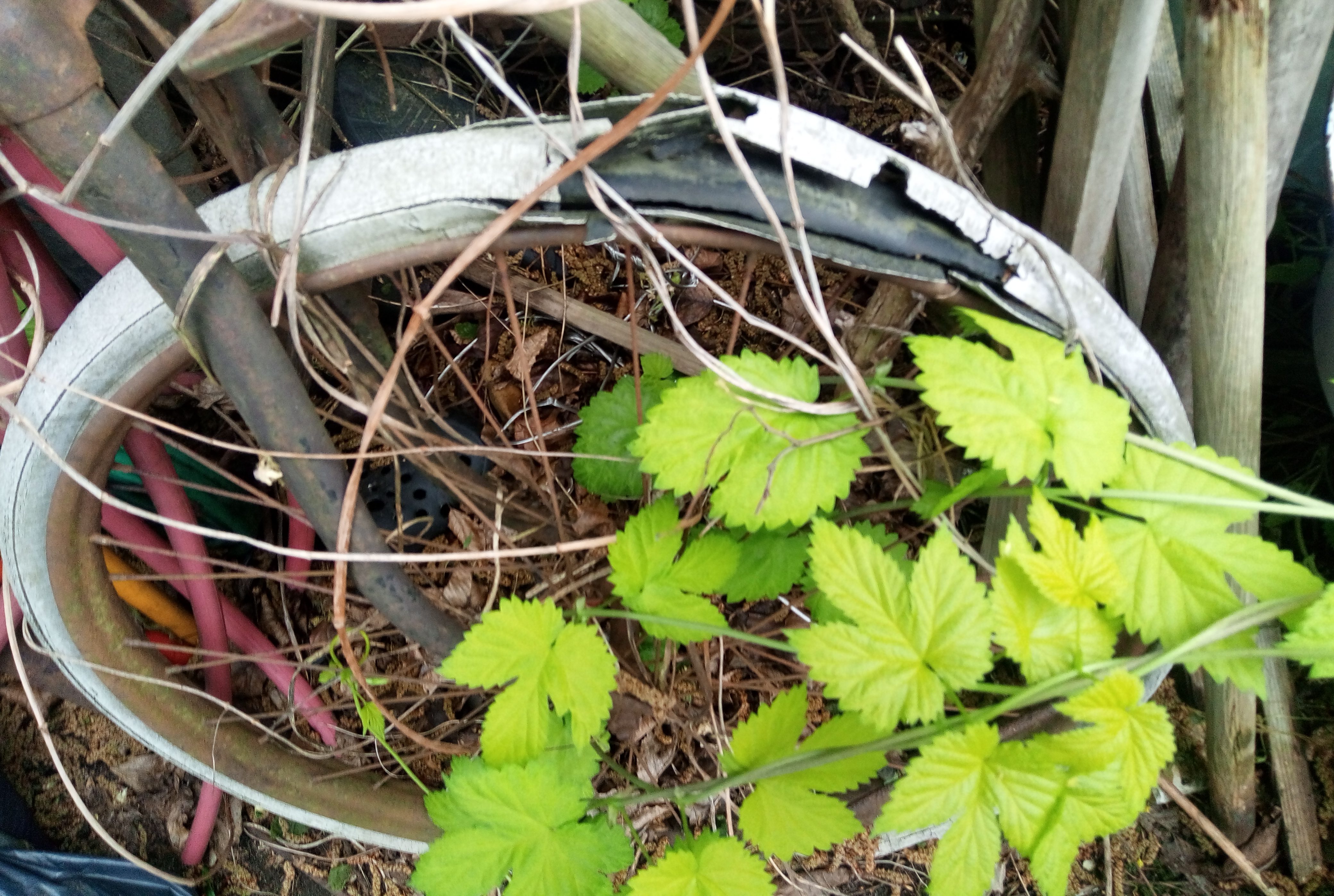
Here in the garden you can still find all kinds of relics of times long past, which are slowly disappearing into a new jungle. Today, there is a stumbling block on the sidewalk in front of the old country house, which commemorates the former Jewish residents of the house who were forced to seek their fortune in the big wide world far away.


THE RED LINES OF BEING

Courtship dance of male great bustards in early spring   © Jiri Bohdal

Great bustards have been already mentioned long time ago in older writings of Pliny the Elder as avis tarda, and in 1758 they were classified with their scientific name Otis tarda by Carl Linnaeus while the description tarda is Latin for slow and deliberate which is apt to describe the typical walking style of these possibly heaviest flying birds in the world who breed in southern and central Europe and across temperate Asia. European population are mainly resident, but Asian birds move further south in winter. Portugal and Spain now contain about 60 % of the world’s population (approx. 50,000 birds in total). The birds are often described as magnificent, stately birds because of the males’ great size, cocked tails and large white whiskers.

In the rural countryside of the great bustards

This species has suffered rapid population reductions across most of its range owing to the loss, degradation and fragmentation of its habitat, as well as hunting leading to a complete extinction in Great-Britain already in the midst of the 19th century. In Germany around 300 birds are now living again at three different locations in the eastern part what means an increase of 600 % in relation to the bad situation in 1997. This is only possible by heavy intervention of ornithologists and nature conservationists who for example achieved that the new railway trail from Berlin to Hannover had to be redirected several years ago in order not to disturb the birds – meanwhile fenced areas have additionally been constructed at suitable locations as a protection for the birds because unfortunately, the great bustards are also a bit stubborn and conservative in their behavior what may be quite dangerous for a vulnerable species.

Single great bustard – photo: Andrej Chudy  CC BY-SA 2.0

So the flexible and intelligent fox could normally always very easily steal their eggs while the great bustards simply do not take enough care of it. But these reserved islands here in Germany seem to be also a little bit like an outdoor-zoo hosting ornithological observation towers for bird watchers of all kind (one good observation point is situated for example near the city of Märkisch-Luch, urban district Garlitz, in the federal  state of Brandenburg) but observation is normally only possible in early spring during the courtship displays. So you need always binoculars as the birds can only be watched in a minium distance of ca. 300 m.

Their distant relative – the crane – instead could be a good teacher in this regard who overflies each year the continents of this world in order to find the best places for survival. But when you do not cross the red lines of being, hence you will never know what is lying there behind the horizon of singularity. Even if you subsequently discover only a half-filled glass of water this is definitely always much better than a dried-up big river in front of your door.

##########################################


E-Mantra, Last Symphony of the Stars, 2023


A BIRD AND THE MEAD OF POETRY

The Red necked Phalarope (Phalaropus lobatus) is an extraordinary bird, a real wanderer between worlds and over the misty seas although not really big (length 19 cm). The photo below shows the appearance during the breeding season, in autumn and winter the plumage turns into a simple white / grey. As a great exception in nature, the gender roles of these birds are completely reversed, while the male birds incubate the eggs and then raise the young birds, the female birds perform the courtship dances to attract the male birds, and furthermore they also protect the breeding site against all kinds of external enemies.


Red necked Phalarope in colorful breeding dress,
Photo: U.S. Fish and Wildlife Service

The birds breed from May to July throughout the northern Arctic and subarctic, including Iceland, Sweden, Finland and Norway. During the rest of the year, the birds remain scattered throughout the tropical and subtropical oceans, but can also be found along the coast of Patagonia and in the southern part of Japan. The German name  “Odinshühnchen” is somewhat unusual and refers to ancient northern European mythology.
.

Odin steals the mead of poetry while being pursued by Sittingur, 
Illustration by Ólafur Brynjúlfsson, 17th century

In the ancient European saga collection ‘Edda’, the deity Odin (in the form of an eagle) steals the mead of poetry from Suttungr’s cave. This mead is a magical drink and whoever drinks it can soon recite all the information and solve any question in a flash. While Odin is pursued by Suttungr, he spits the mead of poetry into several vessels. But the chase was so fierce that some of the spit fell backwards. Therefore, everyone could now drink this part, and so poetry was finally given to mankind by a single bird.


Bird watching led by ornithologist Derk Ehlert
on the Poel Peninsula / Baltic Sea in August 2016

In Central Europe, the Red necked Phalarope can rarely be spotted on its way south in August, when it rests in the German coastal region, sometimes also in Austria at Lake Neusiedl. In August 2016, for example, I had the great fortune to see a this bird during an ornithological excursion to the Poel peninsula / Baltic Sea on an inland pond at a distance of about 200 m, because soon afterwards it was time for the birds to set off again quickly for their flight around half the way of our blue planet.


linked to:

Blue whistling-thrush + Bird of the Week invitation XVI

Felsen und Stacheln auf Teneriffa gesehen von Beatrice

Die Hauptinsel des kanarischen Archipels Teneriffa inmitten des wilden Atlantiks ist ein Ort voller Kontraste, sodass es schwer fällt ein Wort für all das zu finden. Geschaffen durch vulkanische Kräfte vor langer Zeit wird das Zentrum der Insel immer noch durch eine riesige, beeindruckende und archaische Caldera bestimmt, aus der sich der höchste Berg Spaniens, der Teide, erhebt. Auf der Insel finden sich auch verzauberte Schluchten aller Art, alte (Wander)wege, schroffe Küsten und steile Klippen, Sanddünen, Halbwüste, subtropische Zonen, Kiefern- und Lorbeerwälder – perfekte Ausgangspunkte für diverse Erkundungen und spannende Wanderungen in den diversen Klimazonen und Biospheren.  Die folgenden Bilder zeigen mehr die expressiven steinigen Aspekte auf dieser so vielfältigen Insel.

Kakteen in der Halbwüste

Schichtungen von Lava


Blick auf den Teide (3718 m) gesehen vom Guajara (2715 m)


Einsames Haus auf dem kargen Land

Spuren der letzten vulkanischen Eruptionen


Klippen der Costa del Silencio bei Ebbe

Atlantischer Ozean bei El Puertito


Farbige Sukkulenten

Am Kraterrand der vulkanischen Caldera