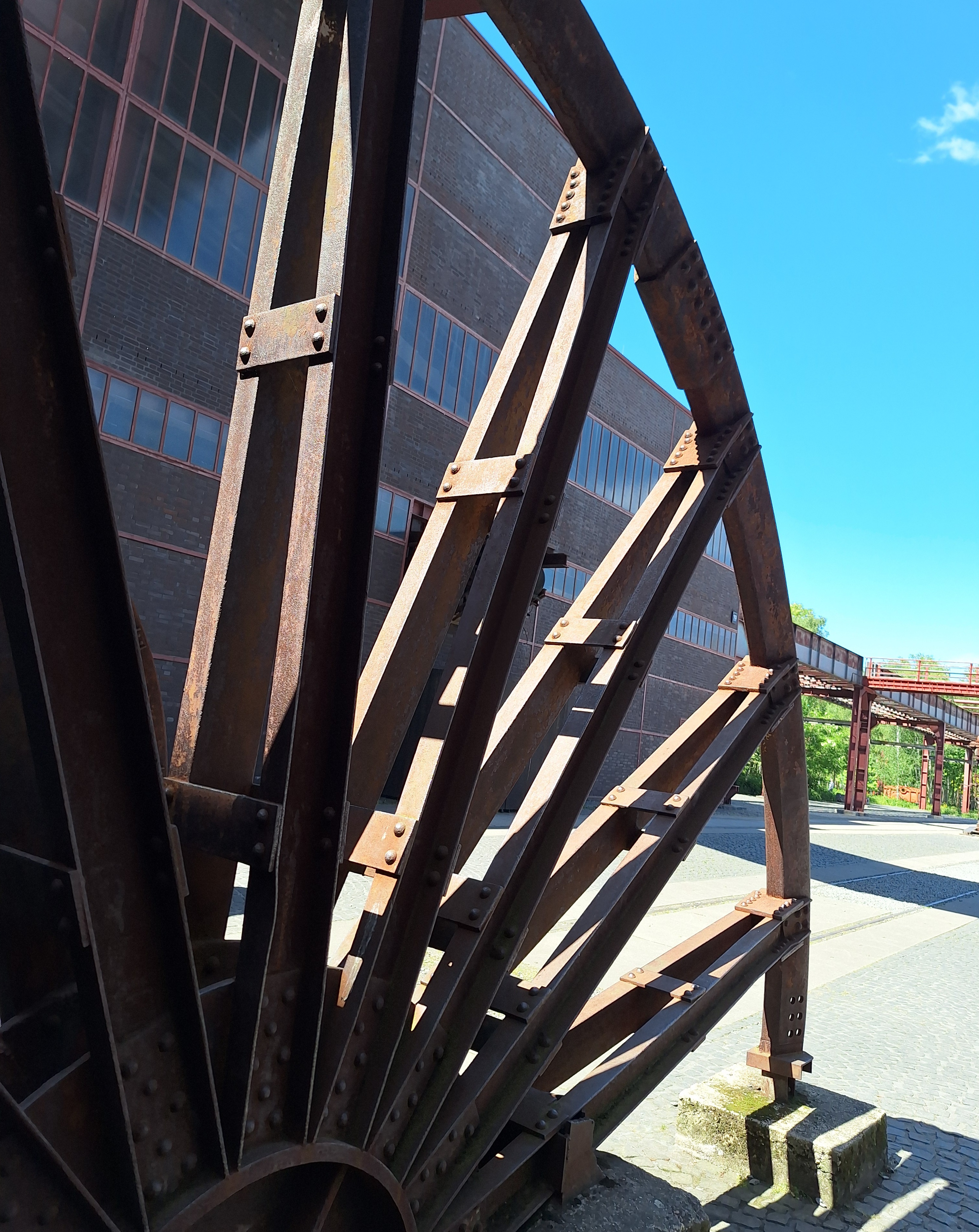
The Ruhr area was once the heart of the German montan industry, where coal and steel determined people’s lives for a long time. Coal has been mined there for a long time, and the earth underground more resembles Emmental cheese, although nobody knows exactly where all the mine shafts are from which the coal was brought to light.
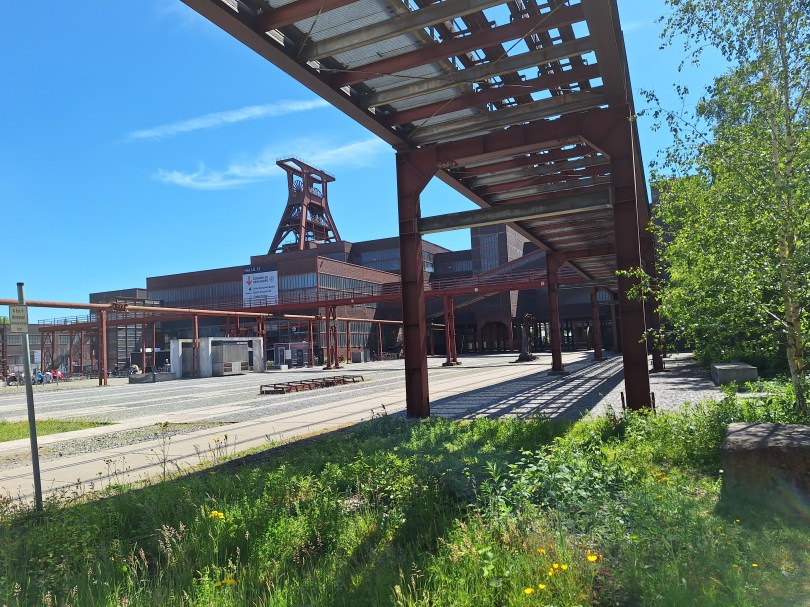
“Zeche Zollverein” (i. e. Zollverein colliery) was a coal mine in Essen that operated from 1851 to 1986. After the commissioning of the central winding shaft 12, the colliery had the highest production rates of all German coal mines for a time in the middle of the 20th century. Today it is an architectural and industrial monument.

Together with the neighbouring coking plant, pits 12 and 1/2/8 of the colliery have been a UNESCO World Heritage Site since 2001 where various guided tours are also offered underground, but you can also simply stroll around the extensive site, where there are also many seating areas in almost green surroundings, where coal trains will pass by only in your mind’s eye.

Today the Ruhr area is really very green everywhere, the air is relatively clean again, and the rivers are no longer cesspools as they were in the 19th century, when the quick money of black gold and steel lured the Krupp family of entrepreneurs to Essen and provided them with a stately home with a huge park that makes you think more of the castles of English lords. This so-called ‘Villa Hügel’ is however now freely accessible to everyone as a place of culture and art.
How times change!
 SUBURBAN TRACKER
You must be logged in to post a comment.