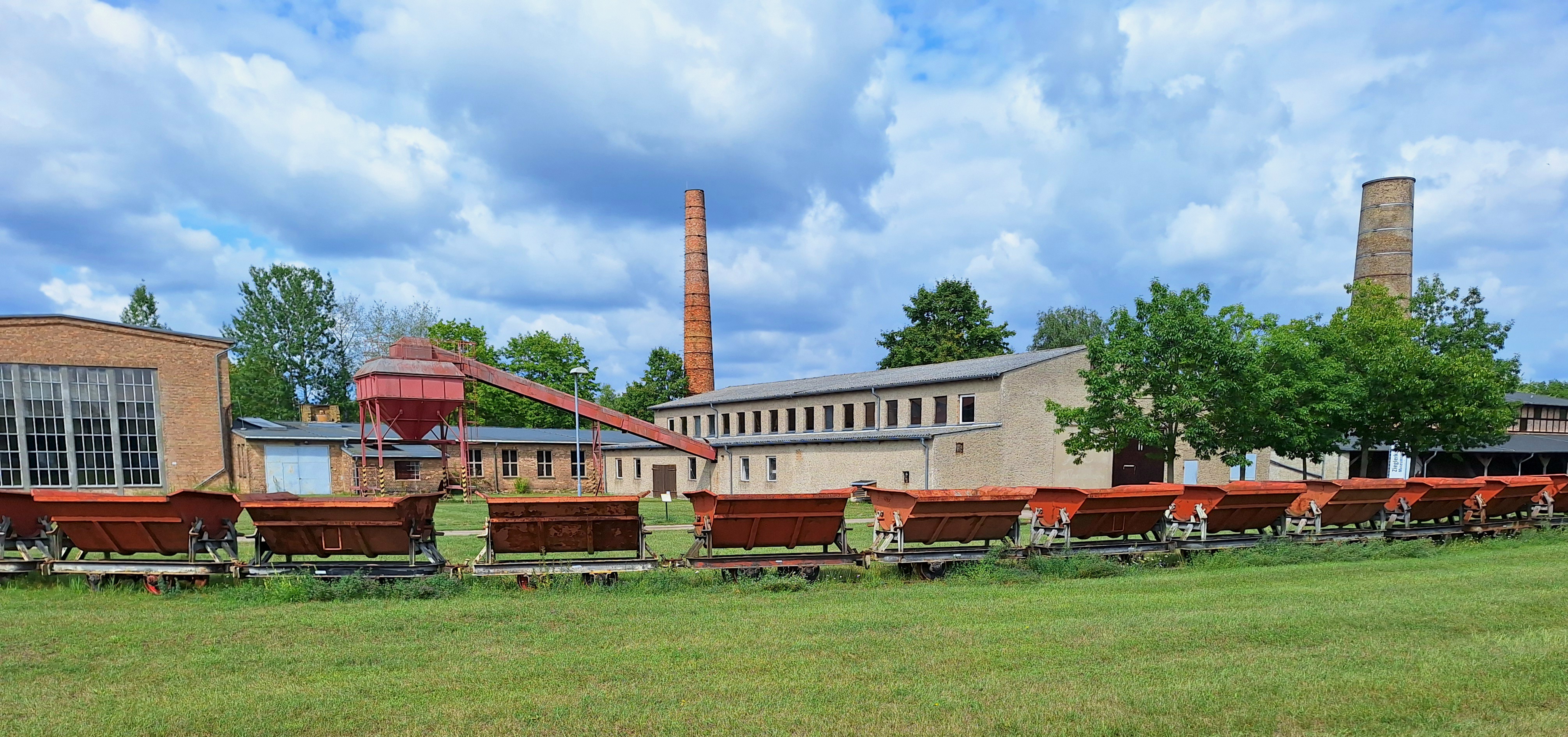
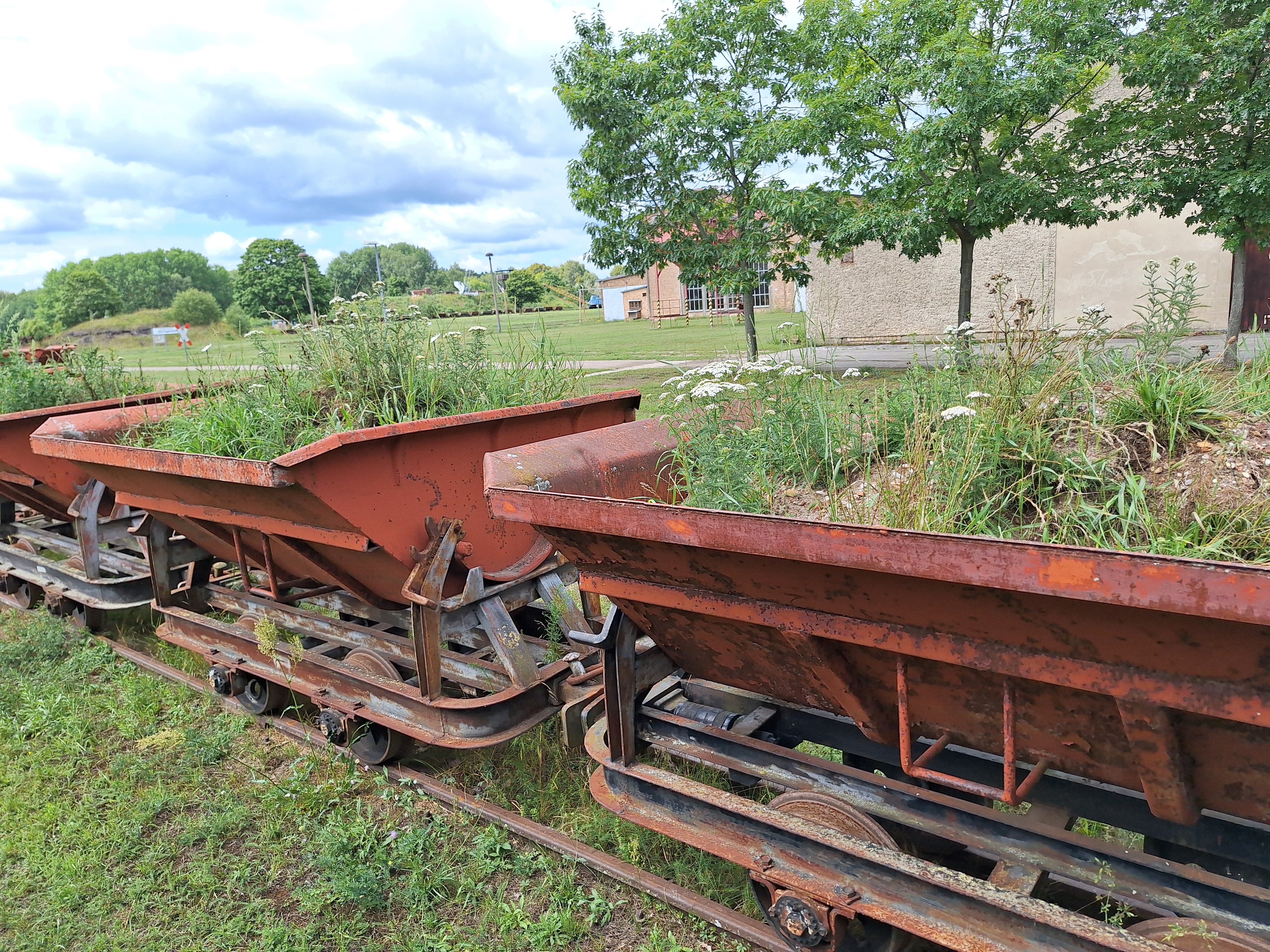
The Mildenberg Brickworks Park was once the largest brickworks in all Europe. Today it is an industrial museum and a popular excursion destination. Museum harbour, ring kilns, workshops and machine halls, everything can be visited. The site is in fact very large – so if you don’t want to walk around all the diverse stations, you can use optionally the free light railway..


Technology of early 20th century: a typical ring kiln
Miiildenberg Brickworks Park is located around an hour north of Berlin in the middle of the Zehdenick clay pit landscape. Brick production in the area dates back to 1887, when rich deposits of clay were discovered during the construction of the Löwenberg-Templin railway line.


The former industrial harbour with old barge and crane
Hence, at the beginning of the 20th century the huge bricksworks area was created near Mildenberg within a rather short period of time. The development was favoured by the fact that the clay quarries were located in the immediate vicinity of the Havel and thus offered favourable transport options by barge. Berlin, which was expanding rapidly due to immigration, had an enormous demand for building materials, which could now be met. The production peaked in 1910 at 625 million bricks a year, fired in 57 Hoffmann ring kilns.

One of the many former clay pits being now beautiful lakes
Afrer 1945, the brick industry in the then Soviet occupation zone developed very well again. Reconstruction after the 2nd World War again required masses of building materials. In the GDR, the area around Mildenberg was the largest, now state-owned, manufacturer of bricks and roof tiles, until the introduction of prefabricated construction technology in the 1960s led to a renewed decline in importance. After reunification in 1991, operations were discontinued as investors saw no longer a future here.
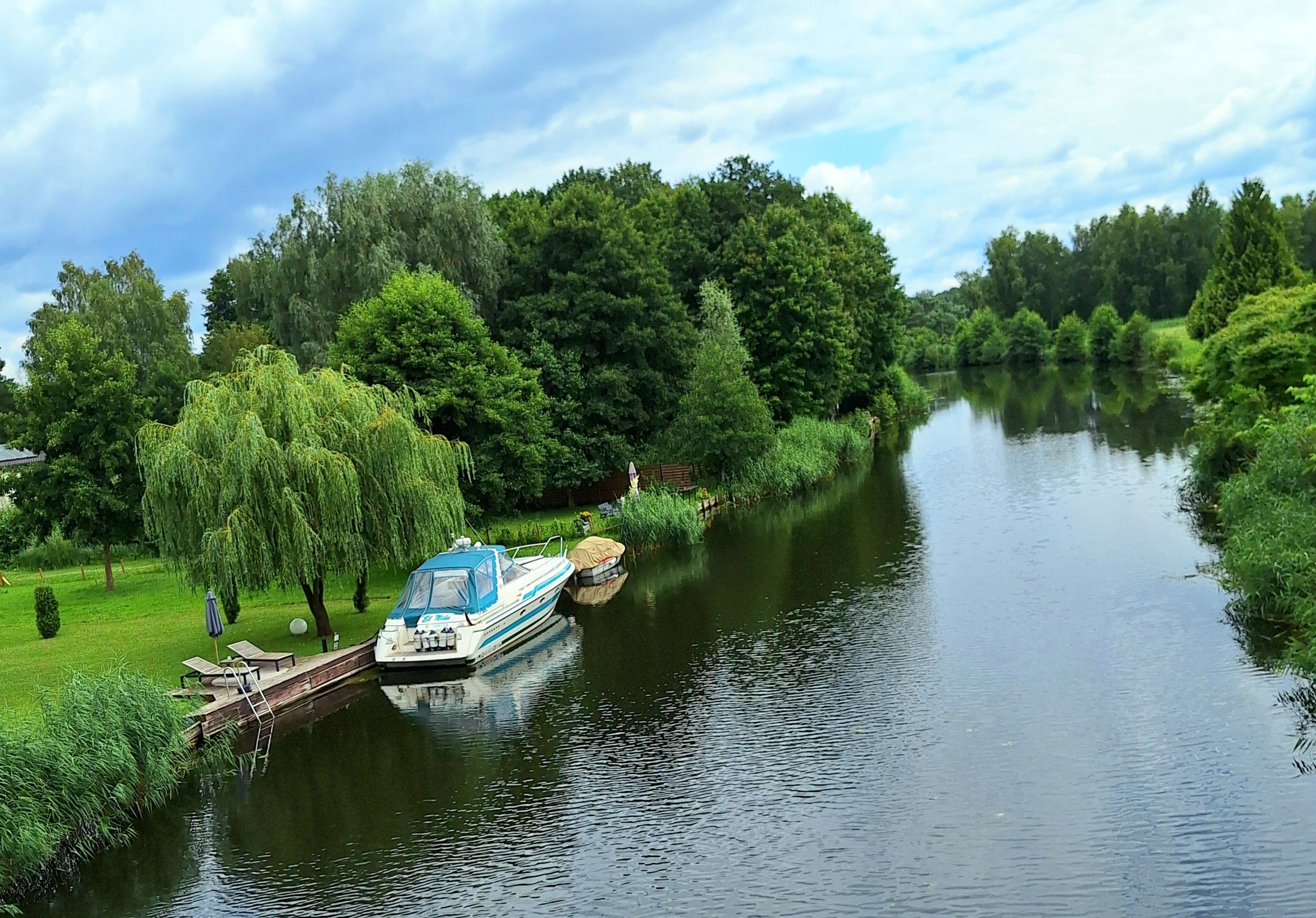
View on Havel river at Mildenberg winding to the south and Berlin
And now this blog will continue desirable summer holidays, cheers!
 SUBURBAN TRACKER
You must be logged in to post a comment.